≡ Menu

Evenflo Classic Glass Bottle Review

Glass bottles are making a strong comeback to the baby bottle scene.  Since the introduction of plastic baby bottles, glass had become more of a rarity, but now with BPA and other chemical scares, some parents are choosing glass over plastic.  One of the most prominent glass baby bottles on the market today is the Evenflo Classic Glass Nurser.  And ‘classic’ is definitely the best word to describe them.  Evenflo has been manufacturing glass baby bottles for over 70 years and boasts that they always have been, and always will be, BPA-free. 

After starting the first few months of my son’s life using the Breastflow bottle only to be disappointed, we made the decision to abandon the Breastflow and try something completely different.  After spending a lot of time researching different bottles and keeping in mind we wanted something reasonably priced, I decided to give the Evenflo glass bottles a try. 

Here are the specifics of the Evenflo Classic Glass Nursers:

The bottle itself is made of clear, chemical-free glass and comes in both four and eight ounce sizes.  They come with a  plastic collar, a sealing disc for milk storage, a white nipple protector, and are available with either silicone or latex nipples.  The opening is standard in size and can be paired with many other brands of standard-sized nipples.  These bottles are very basic and simple, hence, what makes them classic.  There are no special valves, vents, or extra parts that need to be cleaned.  The nipples vent by using Micro Air Vents as opposed to some of the more complicated, and expensive, bottle venting systems on the market today.  The volume is marked on the side of the bottle with clear, raised glass.  The bottles are also available with a Cozy sleeve, a BPA-free, removable sleeve that helps insulate the bottle.  The sleeves come in a number of colors and have small raised bumps to help baby with gripping.  The sleeves feature a double-loop system to easily apply and remove from the bottle.  There are also other brands of sleeves available that fit the Evenflo bottles, such as Siliskins.

What originally attracted me to the bottles was their simplicity.  I was tired of the extra parts involved in the Breastflow bottles and wanted to avoid anything like them in the next bottle I chose.   I also disliked how the plastic bottles developed a permanent haze and scratched easily and had read that glass bottles held up best overall.  We seemed to find the perfect fit for what we were looking for in the Evenflo glass bottles and, at roughly $2 a piece, was willing to give them a try. 

My son was about three months old when we first used them, and I was pretty nervous since he was used to the larger Breastflow nipple.  To my surprise, he latched on and drank the entire bottle with no problems.  The Evenflo nipple never gave us any problems with nipple confusion either, and he had no problem switching between breastfeeding and bottle feeding, which I was kind of anxious about.  The bottle vents very well, despite the fact that there is no special venting system or parts, and we had no problems with excess gas or fussiness after feeding. 

What I love the most about these bottles besides their simplicity is their durability.  They clean up very easily and still look as new as the day I bought them.  I can use a bottle brush on them and there is never any scratching and they wash perfectly in the dishwasher.  I have dropped them a number of times on our wood floor and none have broken or even chipped.  I know that these bottles will last until my son grows out of them, and will be just as good for any future children. 

Another great thing about Evenflo glass bottles is that they hold the temperature of the milk very well.  The thickness of the glass helps keep milk warm longer, and even moreso with an added sleeve.  The sleeves also add some flair to an otherwise plain bottle.  Baby will love the bumpy texture and bright colors as well.  My son has had no issues learning to hold the bottle on his own, despite the fact they are heavier than plastic.  The sleeves are also dishwasher safe and I have washed them without removing them from the glass with no problems. 

These bottles are also great for breastfeeding.  Glass is one of the best options for storing frozen breastmilk and these bottles come with sealing disc to make it easy.  Evenflo glass bottles will also hook directly into any style of Medela breast pump.

One of the few issues I have had with the bottle is the nipple collapsing, which I soon found was due to the way I screwed on the collar.  When the collar is screwed on too tightly, the Micro Air Vents built into the nipple can’t vent, so the nipple collapses.  A simple loosening of the collar immediately fixes the problem.  You will know the bottle is venting correctly when you see air bubbles flowing upward into the bottle while baby feeds.  The only other issue I’ve had with one of the bottles is the nipple cracking.  It only has happened to one nipple, but it is worth mentioning.  Because they are glass, there is always the possibility of them breaking or cracking, and they are heavier than most bottles.

Here is a quick breakdown of the pros and cons of these bottles:

Pros: Simple and classic, very easy to clean, no residue build-up, durable, chemical-free, hold temperature of liquid, compatible with insulated sleeves, standard neck size fits multiple brands of nipples, Medela breast pump compatible, great for breast milk storage, inexpensive

Cons: Possibility of breaking, heavier than plastic, nipple may collapse, nipple may crack

Overall, I am extremely into the Evenflo glass bottles and wish we would have started with them versus the Breastflow bottles.  I am convinced they are one of the best bottles out there, and they also happen to be one of the cheapest.  Give the Evenflo Classic Glass Nurser a try.  I don’t think you’ll regret it.

What do you think about Evenflo’s Glass Nursers?
{ 6 comments }

Choosing a Baby Nursery Layout

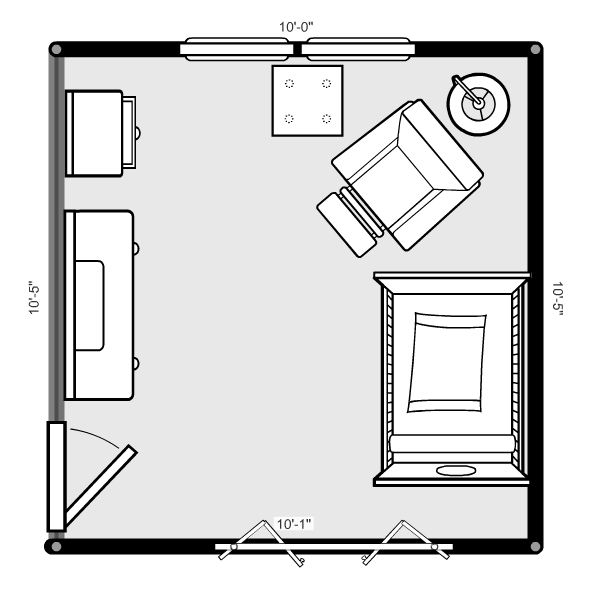
You’ve gotten everything ready that you need for the baby nursery from furniture to the wall hangings.  The paint is on the walls and you’re ready to move everything in.  But there is one problem…you’re not sure how! 

Arranging the furniture in the baby nursery should be fun, right?  It can be a difficult task at times, trying to balance what looks good with what will be practical.  There are a few key things you need to keep in mind when choosing the layout for your nursery. [continue reading…]

{ 1 comment }

Bambu Baby Bowl and Utensil Review

Many parents are avoiding certain plastics not only in baby bottles, but also in toys and the feeding supplies they use.  A friend of mine who is very into using only natural and organic baby products bought the Bambu baby bowl and spoon and fork utensil set for us to use.  Now that we’ve used it for a couple of months, I have a definite idea of what I like and dislike about them.

First of all, I’ll give you the details.  I specifically have and use the Bambu 4-1/2 inch diameter Mini Me bowl in Naked, which simply means it is the natural bamboo color.  This particular bowl also comes coated in blue, kiwi (shown left), spice or bubble gum.  These bowls are hand shaped from organic bamboo and are extremely smooth to the touch.  You don’t have to worry about splinters.  They are also very light-weight.  The bowls are coated with a safe lacquer that makes them waterproof and able to hold hot or cold foods.  However, they are not dishwasher safe and should not be left to soak in water for a long period of time.  Clean up is easy with a quick rinse in soapy water and towel dry. 

After using the bowl for over two months, there are a lot of things I like about it.  First of all, I love the way it looks.  I love the natural look of the wood.  It is very different from any other baby feeding product I’ve seen and it is plain-and-simply cute.  Although I’m not the type of person who avoids plastics for my baby at all costs, I do like the fact that it is made from a completely natural substance.  This next one might surprise you, but I actually like the fact that it isn’t dishwasher safe.  This requires that I wash it immediately after my son eats, which means it is ready to go for his next feeding, always.  I have used the bowl for both hot and cold foods, and it hasn’t caused any chipping, splintering, or peeling in all of it’s use.  I love the depth of the bowl. It seems deeper than most baby bowls I’ve seen.  And I love how light and compact it is.  Another great thing is that when baby outgrows using this bowl, it can easily be used in the future for snacks, or even as a prep bowl.

The only thing I say I might dislike about it is the cost.  They retail for over $10 for one bowl, which is kind of steep.  However, considering the quality, function, and safety of it, I think it is worth it.

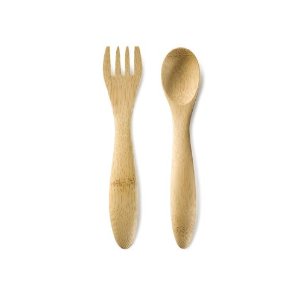
As far as the feeding utensils, a Bambu baby utensil set is available, which includes a fork and a spoon.  The set is made of the same organic bamboo as the bowl.  There are only natural wood colors available.  They are 5 inches long and each has a curved handle to make it comfortable to hold.  Again, the utensils are completely smooth and light-weight.

Many of the things I like about the utensils are similar to that of the bowl; completely natural, light-weight, and easy to clean.  I also like that the bamboo  is easier on a baby’s sensitive gums as opposed to using a metal spoon or fork.  Their handles are thick and curved and make it easy and comfortable to hold.

Probably what I dislike the most about the utensil set (besides the price) is that the actual fork or spoon area that baby eats from seems a little large.  Although my son had no problem eating off the end of the spoon when he was four and five months old, it is a little bit more bulky than a lot of spoons out there.  Also, the tines on the fork are big and somewhat dull, so if you’re planning on using them to spear a hard piece of food, it may be a little more difficult than using a traditional fork.  However, I think this adds to its safety.

Overall, I have loved my Bambu bowl and utensils, and I plan on purchasing more when the need is there.  I am very into Bambu!

Have you ever used Bambu?  What do you think?

{ 0 comments }

Teaching Your Baby to Fall Asleep on Their Own

Possibly one of the most frustrating and exhausting parts of having a baby is when they don’t sleep well.  Some babies are great sleepers from the start and don’t have any trouble going to sleep at night and staying asleep.  But then there are those that go to sleep as long as they are rocked, held, or fed to sleep.  This is fine until baby gets old enough to rely on this as their only method of going to sleep.  It will eventually make it so they must have you in order to sleep since they haven’t learned to do so on their own.

My son was definitely the type that relied on me every night to put him to sleep.  I would usually hold him and bounce her for a while, and then feed him.  He had no problem going to sleep that way.  The problem was that once I set him in his crib, he sensed that he wasn’t next to me and he would wake up.  So then the cycle would continue; bouncing, feeding, sleeping, and waking.  There were some nights that I would beat a path between my room and his until he finally settled completely for the night.  I was exhausted, and so was my husband.  We both had full-time jobs at the time and getting our sleep at night was crucial.  I never even thought there was an option out there to teach my baby how to sleep. 

But let me tell you, there is, and it worked for us!  I found out that when a baby gets old enough, usually around four months old, they are capable of learning how to go to sleep on their own.  So how do you do it?  First of all, you  must make a consistent bedtime routine each night.  This routine can include anything you choose to help your baby learn that it’s time to go to sleep.  Baths, reading, changing into pajamas, quiet playing, singing and music are just some ideas you can incorporate into a routine.  It is important that you do the same routine every night at around the same time so your baby will learn to associate it with bedtime.  Our particular bedtime routine starts with changing our son into his pajamas, feeding him, and reading a few books to him in his room.  We do this consistently around 7:30 each night.  I say a quick bedtime prayer and lay him down in his crib, awake.  I am able to turn to light off, walk out, and shut the door without him crying.  He puts himself right to sleep.

It wasn’t this easy at first.  We had about three nights that were rocky before he learned his routine.  The first night I did the entire routine, lay him in his crib awake, and walked out.  He started crying.  And he cried.  And he cried.  And he cried.  About every five minutes I would walk in and talk to him and give him his pacifier.  After about forty-five minutes of this, he finally went to sleep on his own.  The next night was still rough but much better.  It took him about twenty minutes.  And finally the third night took a little less than ten.  It was very hard to do, but after seeing progress each night, we knew he was learning.  And let me tell you, it was worth it!  By night four, I lay him in the crib and he didn’t cry at all.  He had learned how to put himself to sleep.  And it’s been that easy ever since.  No joke.  We were amazed!  The key is to make a routine and stick to it, to lay them down tired but awake, and to be consistent.  I was very skeptical when we first tried this, but it has worked for us. 

Your baby is capable of falling asleep on their own, and it is an important skill that they will need to learn.  It may be hard to try something different at first, but in the end it is best for your sanity and theirs. 

I learned about the sleep learning process and the steps involved in the book, The Sleepeasy Solution.  I highly recommend at looking into it if your baby has any sleep issues.

What challenges do you face in getting your baby to sleep?  What seems to work best for you?

{ 4 comments }

Choosing a Color Scheme for the Baby Nursery

One of the most exciting parts for most parents when planning for the arrival of their baby is designing a nursery.  One of the biggest decisions that needs to be made in planning the nursery is choosing a color scheme.  The colors you will use are a key component that will set the mood in the nursery, so you will need to choose wisely.  With thousands of colors and combinations to choose from, how can you make the best decision to create the perfect nursery of your dreams?

First and foremost, you need to start with an idea of what you want before just rushing to the store and buying the first paint colors that look good.  Many times, unless you’re one of the few lucky people out there, this will only bring disappointment and frustration.  Remember, it is best to take your time when planning the perfect nursery, so make sure you give yourself enough time to plan before baby arrives. 

One of the best places to find ideas for your nursery is the Internet.  You will find thousands of ideas from both professional and personal sources.  See what other people have done, and decide what you like and what you don’t.  One of my favorite places to get color schemes is HGTV’s Rate My Space website.  You could also try going to a book store and browsing room decorating books.  The way that I chose a color scheme for the nursery was by selecting the bedding I was going to use first.  I had no idea what colors or theme I wanted to go with for the nursery.   I decided that first I would choose a bedding set and then base my colors from that, which worked out great.  If you are having trouble knowing what colors you want to use based off of a website or book, maybe you will be inspired by a blanket or maybe even a picture.  Shop around until you know what you want to do. 

Once you have an idea of a scheme, it’s time to test it before you decide to put it on your walls.  Many companies that sell paint have a place on their website to test color combinations in a room of your choice, such as the Sherwin-Williams paint visualizer.  You can oftentimes select a premade room or even upload a picture of the nursery itself to try different colors in.  This tool will give you the name of the paints you have selected so you can know exactly what you want when you go to make a purchase.  Also, this tool can be helpful as it will automatically generate ideas for coordinating colors to accent the nursery with if you’re not sure what colors would be complimentary.  Keep in mind that your nursery will probably have at least three colors involved; the wall color, the furniture color, and an accenting color.  For example, the main colors for my son’s room are white (the furniture), soft beige (the walls), and chocolate brown and sky blue as accents.  Accents can be anything from artwork, bedding, shelves, a rocking chair, or even the dresser painted a custom color.  Unless your theme is monochromatic, you will want to have at least three colors overall in the nursery.

Taking a trip to your local paint store and selecting the color swatches is the next step, whether you have used an online tool to select them, or whether you are just going by what catches your eye.  If you are basing your color selections from bedding or a picture, bring the item with you so you can easily match colors or find coordinating colors without having to guess.  Even if you’ve used an online tool to visualize the paint colors in a room, it is probably a good idea to bring several swatches home with you before making a purchase.  Many times paint colors will look very different on a computer screen or on a swatch in the store.    Most importantly, save yourself some frustration by bringing the swatches home first and looking at them in the light of the room it may be used in.  Look at it during different times of the day.  Some paint companies sell miniature containers of paint colors to paint a small portion of your wall to test the color before investing in a large amount.  Do what you think will help you make the best decision.

Once you have selected your colors, it’s time to decide how to use them.  You may decide to paint the walls one solid color or paint one wall an accent color, such as the wall behind the crib.  Making a pattern or design such as stripes or circles is another option.  Try drawing it on a piece of paper first before you go for it.  You probably don’t want your nursery to be too busy and drawing it first will help you visualize a pattern.  Remember that the main wall color will have the most effect on the mood of the room, so if you are wanting a calm room, use lighter colors.  If you want a bold or rich room, use the brighter or darker colors.  Once you have decided on the wall colors, the accent colors will fall into place.  Accent colors are just the icing on the cake, adding visual interest to highlight different areas of the room.  You can use accent colors in the bedding, furniture, or the artwork you choose for the nursery.  If you are especially creative, you may want to paint-your-own nursery artwork.  Just remember that the accent color should not overwhelm the space, but be used tastefully and in key places.  Trust your gut when deciding on how much to accent and when in doubt, get a second opinion of a trusted friend or family member who will be honest. 

Most importantly, don’t be overwhelmed by the process.  Planning the color scheme of your baby’s nursery should be fun and not stressful.  If you find you are having a hard time, step away from it for a while until you can come back to it with full energy and a fresh start.  Go with your vision and make it happen! 

And once you’re done with the colors, you may need help choosing your nursery layout.  Read about choosing a layout for the nursery right now.

How did you make your decision for a nursery color scheme?

{ 0 comments }

Breastflow Bottle Review

For moms planning on breastfeeding and supplementing with a bottle, there are a number of options for breastfeeding-friendly bottles.  One of the very popular and highly-advertised bottles is the Breastflow Bottle by The First Years.  The manufacturer claims that these bottles come as close to natural feeding as possible, using a unique double-nipple system that requires both compression and suction to cause milk flow.  The bottle is supposed to help make the transition between breastfeeding and bottle-feeding seamless.  They are made of BPA-free plastic, are a wide-mouthed design, and come in five and nine-ounce sizes.

I have personally used the bottles for a few months with my son.  I planned on breastfeeding before he was born and did a lot of research as to what the best bottle would be to supplement.  Overall, the Breastflow bottles get great reviews, so I decided on these.  I first introduced a bottle to him when he was three weeks old.  To my surprise, he took the bottle immediately and had no problems finishing it.  We had also tried the Medela bottles that came with my pump, but he would not take to it.  The Breastflow bottles were superior in this way.  Over the months that I used the Breastflow bottles, there were no problems with nipple confusion when I’d switch between breast and bottle.  I thought they were the perfect bottle and recommended them to my friends.  At this point the only thing I did not like about them was having the extra nipples to clean.

However, once my son reached about three months old, I started noticing some problems.  The outer nipple would collapse every time he fed with it, no matter how tight or loose the nipple ring was placed.  The shape and design of the outer nipple made it impossible for him to make a seal with his mouth when it collapsed, making his feeding long and frustrating for him.  I also noticed that the bottles were building up a permanent haze that could not be removed with washing, which is common for plastic bottles.  I finally got frustrated enough with collapsing nipple and decided to go with a completely different bottle, the Evenflo Glass Nurser.

Here is a quick breakdown of the pros and cons of these bottles.

Pros: Easy for baby to latch, mimics breastfeeding, wide-mouthed opening makes it easy to add liquids or powder, cute design, BPA-free

Cons: Double-nipple means more parts to clean, film builds up on plastic, nipple collapses, bottle doesn’t fit Medela breast pumps

Despite the fact that I had a bad experience in the end, there are definitely some good things about the Breastflow bottle.  I was definitely into it at first, but later we had to make a change.  Maybe the Breastflow bottle will work for you and your baby.

If you’re trying to make a decision on a bottle for your baby, please read this article on glass versus plastic baby bottles.

What do you think about the Breastflow bottle?

{ 2 comments }

The Best Burp Cloth

The best burp cloth, as a matter of fact, isn’t a burp cloth at all!  I’ve tried the flannel and terry cloth varieties, and they’ve all been one big, non-absorbent disappointment.  I was discussing this with my sister, and she recommended using cloth diapers as a burp rag.  Yes, I said cloth diapers!  She gave me some that she had on hand and I haven’t turned back since!  Specifically, they are the Gerber pre-fold cloth diapers.

So what is so great about them?  First of all, they are large.  They will easily cover your entire shoulder with room to spare, so no worrying about baby missing the mark.  Even better is their thickness.  Since they are made to be used as diapers, they are much thicker than your typical burp cloth.  If your baby spits up a lot, it will do a great job absorbing it instead of letting it run right through the material.  The material is much more durable than flannel and terry cloth burp rags, but it is still soft and pliable. 

I also love that the cloth diapers can be used for other purposes.  I use them on a daily basis when I feed my son cereal.  I tuck them into his shirt to make a bib and it covers his entire chest and lap, unlike a typical bib which just protects his chest.  I don’t have a problem with food getting on his clothes when I use the cloth diaper.  I also use these for a simple drool/runny nose cloth.  Once again, the absorbency of these cloths work great to wipe the face off because it doesn’t just smear around the wetness on his face. 

If you are the type of person that fashion is more important than function, consider purchasing some decorative trim from a craft store and sewing two strips along each side for trim.  It’s a simple and inexpensive way to dress up a basic cloth diaper and you don’t have to sacrifice fashion for function.

Don’t waste your time on other burp cloths and give these old-fashioned cloth diapers a try!

{ 0 comments }

Paint-Your-Own Nursery Art

Want to spice up your nursery walls and not break the bank?  Here is a simple and inexpensive idea to get you started.  I personally did this for my son’s nursery.nursery painting

1.  Buy inexpensive picture frame/s

These come in all colors. I love classic black and white!

For my project I bought four large plastic picture frames that came with a white matting.  They were only $3 a piece. If you are able to spend more money, you can get a rich-looking, long-lasting wood frame.

2.  Buy paints and supplies

If you don’t already have brushes and paints on hand, you can easily find some at a craft store or maybe you know someone who can lend them to you.  Choose colors that match your room’s theme.  I bought two shades of brown and two shades of blue and white for accenting since these were the colors I was using in the nursery.

3.  Get creative

It’s time to paint!  I simply used the paper that came inside the frame and painted the back.  This way I had a sure fit when I was done.  Choose your design and go for it.  Don’t stress over trying to make your painting look perfect.  Imperfections give character.  In my case, I didn’t do the painting at all.  I asked my nieces and nephews to do it for me!  They each got their own paper and I told them they could paint whatever they wanted (using the colors I provided), just as long as they filled the paper completely.  So how did it turn out?  I got four unique, abstract pieces of art to group above my sons crib.  They loved the fact that they were painting something for baby, and I loved the fact that the paintings had sentimental value.nursery painting

So, what do you think? Share your projects and ideas with me!

{ 6 comments }

Five Over-Rated Baby Products

In a recent post, I wrote about five baby products that I couldn’t live without.  However, there are also some products out there that I would think twice before buying.  Here are five I think you are better off saving your money on. 

1.  The Crib Bumper

Research has been done on SIDS cases to show that the less you have in your babies crib, the better off you are in protecting them from SIDS.  Yes, bumpers may look cute, but baby’s safety comes first.  So save your money.

2.  The Crib Mobile

While on the subject of cribs, the crib mobile is another product that you can pass on.  Once again, mobiles may be cute, but the truth of the matter is that your baby will spend most of their time sleeping in their crib, not staring at the mobile.  When baby is awake and playful, they are most likely going to be spending time with you, and not in their crib.

3.  The Baby Sling

Not to be confused with the Moby Wrap or a Baby Bjorn carrier, baby slings are both limited in use and a possible safety hazard.  These type of carriers are only able to be used with newborns and very small infants, so they are not great for long-term use.  Their safety is also questionable.  These types of slings are not securely wrapped around the body, and the way baby is laid in the sling can be a breathing hazard.  They are also uncomfortable and can hurt your back and shoulder because the weight is placed on just one side of the body. Considering these factors, there are much safer and more versatile carriers to spend your money on.  I personally recommend the Moby Wrap.

4.  The Bassinet

Over-priced and, oftentimes, underused, bassinets are the type of product everyone likes to think you’ll need, but they really aren’t necessary.  For the few short weeks or months you decide to keep your baby in the room, if at all, you are better off getting a hand-me-down.  Bassinets are expensive, and babies outgrow them quickly. 

5.  The Baby Bath Tub

Save your money and your back and pass on the baby tub.  I learned quickly that bending over the side of the tub during bath time was very awkward and hard to hang on to baby, whether they are in their own baby tub or not.  I highly recommend using the kitchen sink.  It’s smaller and at your level, making it easy to hold onto baby and save your back at the same time.

Do you agree or disagree with my list of over-rated baby products?  What products do you find to be over-rated?

{ 0 comments }

Top Five Must-Haves for Baby

After much trial-and-error in making purchases, I’ve compiled a list of the top five must-have products for baby.  Hopefully you will soon agree that these products are hard to live without!

1.  The Moby Wrap

This carrier has turned out to be a life-saver!  It’s simple, it’s comfortable, and baby will love it, particularly is they are a high-maintenance baby who wants to be carried most of the time.  The Moby will allow you to get things done with two hands but keep baby content and safe at the same time.  Check out my review of the Moby Wrap.

2.  The Exersaucer

As soon as baby is old enough to support their head and their weight on their legs, the exersaucer will make a great activity.  It keeps them contained and in close reach of a variety of toys and activities, which babies will love practicing their grabbing and chewing skills on.  Although a larger investment, baby will get hours of use and you will get hours to get things done. 

3.  The Pacifier Clip

A simple and inexpensive solution to a very annoying problem, the pacifier clip is simply something that I could not live without.  As much as babies like to spit out their pacifiers, this is a sure solution to keep it from hitting that dirty floor at the store.

4.  The Vulli Teether

Hands down, this is by far the best and favorite teether for my son.  Don’t waste your money buying a lot of teethers when you have this one!  Read about what makes the Vulli teether so great.

5.  The Bumbo Baby  Sitter

This handy little chair is great for babies when they are able to hold their heads on their own.  It’s a molded booster chair that comfortably and safely props your baby up in the sitting position so they can look around.  It is great for play or feeding time, or for that fussy baby that wants to sit and watch you everywhere you go.

Do you agree with my list of must-have baby products?  What other baby products do you consider must-haves?

{ 1 comment }